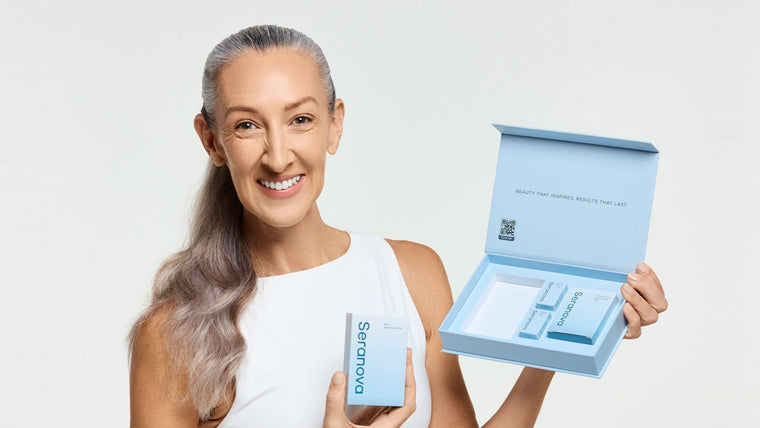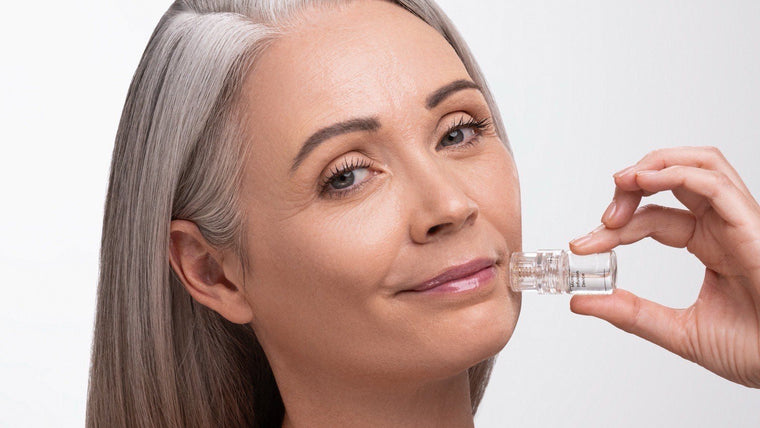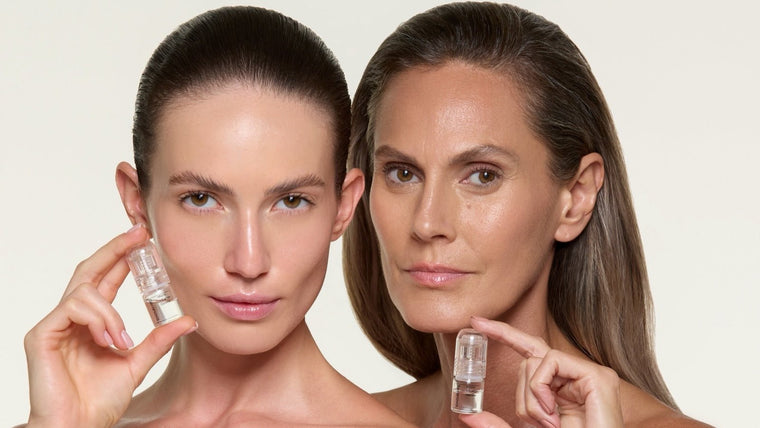


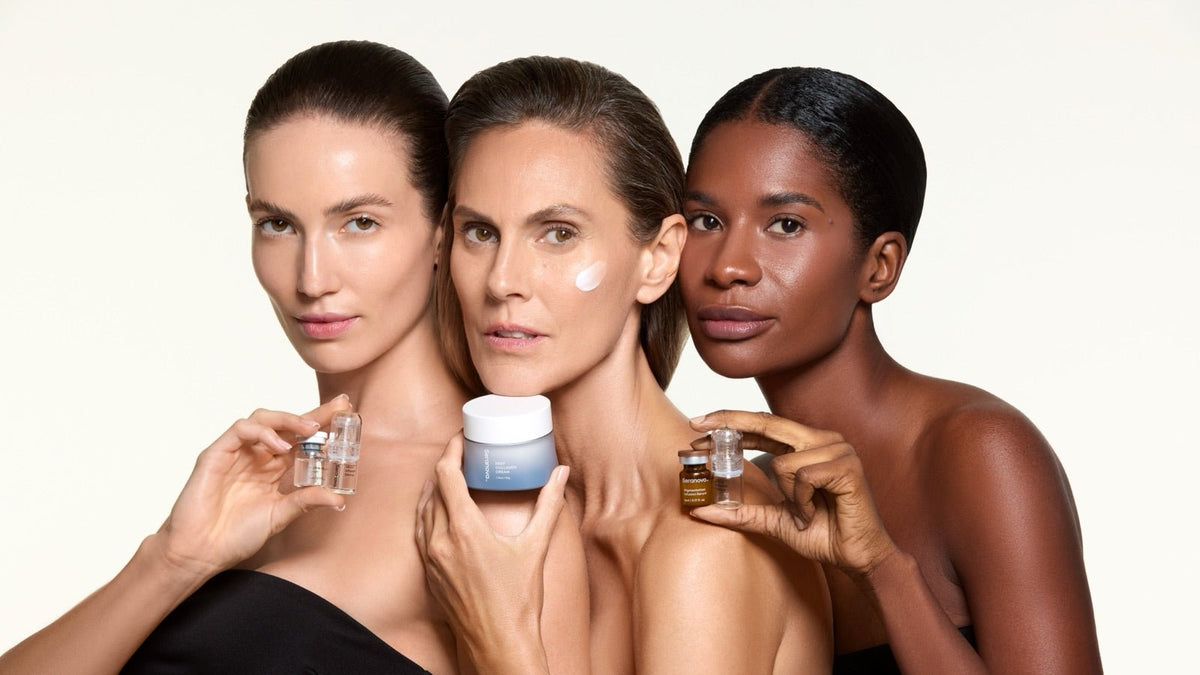
Micro infusion and microneedling are often used interchangeably, but they describe two distinct approaches to skincare. Micro infusion is the approach behind The Seranova™ Micro Infusion System: a stamp-style system with ultra-fine, cosmetic-grade touchpoints, a fresh sterile head and a sealed peptide and hyaluronic acid serum for every session, used for 10 minutes once every two weeks.
The distinction matters, because it determines what you buy, which serum reaches your skin, and how much upkeep your routine requires.
This guide compares micro infusion vs microneedling at home, meaning dermarollers and microneedling pens, across the factors that matter most for mature skin: how each method works, how it feels, hygiene, frequency and where it can be used.
What is the difference between micro infusion and microneedling?
At home, microneedling uses a tool on its own, such as a dermaroller or microneedling pen, with serum applied as a separate step. Micro infusion (also written microinfusion) combines the two. With The Micro Infusion System, ultra-fine touchpoints and serum are delivered together, in a single pressing motion.
In this guide
- Micro infusion vs microneedling at a glance
- What is microneedling?
- What is micro infusion?
- Five key differences
- Microchanneling vs microneedling vs micro infusion
- Which is better for mature skin?
- Can you combine them?
- Frequently asked questions
Micro infusion vs microneedling at a glance
| Dermaroller or microneedling pen | The Micro Infusion System | |
|---|---|---|
| Technique | Rolled or passed over the skin | Pressed straight down, like a stamp |
| Serum | Purchased and applied separately | Included, sealed in a single use vial for each session |
| Heads | Reused, or replaced at your discretion | A fresh sterile head for every session |
| Cleaning | Clean and dry after every use | Nothing to clean |
| Frequency | Varies by brand | 10 minutes, once every two weeks |
What is microneedling?
Microneedling describes the use of a tool covered in fine points, passed across the skin. At home, it comes in two formats:
- Dermarollers: a small handheld drum covered in fine points, rolled across the skin.
- Microneedling pens: a handheld tool that moves a small head of points up and down as it is passed over an area.
In both cases, the tool travels across the surface of the skin, and the serum is a separate step, selected, purchased and applied by hand afterward.
Most dermarollers and pens are designed for repeated use. The head stays in service for weeks or months and must be cleaned and dried thoroughly after every session. Some pens use replacement cartridges, changed at your discretion.
What is micro infusion?

Micro infusion is a stamp-style method, and it is how The Micro Infusion System works. The system is pressed onto the skin, lifted away and moved to the next area. Nothing is rolled or glided across the face, which gives precise control over where each press lands.
The defining feature is that the serum is part of the system. In The Micro Infusion System, a sealed single use vial loads into the system and is released with each stamp, helping the serum absorb more effectively than applying it by hand.
How an at home micro infusion session works
- Prepare. Begin with freshly cleansed skin. Open the system, fill it with serum and attach a fresh single use head.
- Press. Stamp the ultra-fine, cosmetic-grade touchpoints across cleansed skin, helping the serum absorb more effectively than by hand.
- Reveal. With a session every two weeks, skin looks smoother, plumper and more refreshed over time.
Micro infusion vs microneedling: five key differences
1. Technique: rolling across the skin or pressing straight down
Dermarollers and pens travel across the surface of the skin. The Micro Infusion System presses down and lifts away.
Many people find the stamping motion more comfortable, which matters more as skin starts to feel thinner and more delicate with age. 87% of surveyed customers needed no recovery time.
Based on a self-reported survey of 282 Seranova customers.
2. Serum: included, or sourced separately
With microneedling, the serum is your responsibility. Results depend on the product you choose, as does the running cost.
With The Micro Infusion System, the serum is included and formulated for the system. It is built around:
- A Bioactive Peptide Complex of Hexapeptide-8, Tetrapeptide-11 and Tetrapeptide-9, which helps improve the look of firmness, for skin that looks smoother and more elastic.
- Matrixyl 3000™ Peptide Complex, a recognized peptide duo that helps improve the look of firmness and reduce the look of fine lines and wrinkles.
- Hyaluronic acid, a moisture binding humectant that delivers lasting hydration to visibly plump the look of skin and soften the appearance of fine lines and wrinkles.
- Niacinamide, a form of vitamin B3 that helps visibly refine the look of texture, even the look of tone and reduce the appearance of fine lines.
- Glycerin, which helps skin feel hydrated, soft and comfortable.

3. Hygiene: reusable heads or single use
A reusable dermaroller or pen head must be cleaned and dried properly after every session, for as long as it remains in use.
The Micro Infusion System removes that step entirely. Every session opens a new sterile head and a fresh sealed dose of serum, and both are discarded afterward.
4. Frequency: how often each is used
Frequency for at home dermarollers and pens varies widely by brand, and some are marketed for use several times a week.
The Micro Infusion System is used for 10 minutes, once every two weeks. It is designed as a considered, occasional routine rather than a nightly habit, which makes it easier to sustain over months.
5. Coverage: where each can be used
Permitted areas differ by brand, so always check the guidance for the specific product.
The Micro Infusion System is for use on the face, neck, lips and chest, including the lip border. Keep about 1.5 inches away from the eyes. For the eye area, Micro Infusion Patches are made with delicate skin in mind, and are used three days after a micro infusion session.

Microchanneling vs microneedling vs micro infusion
Microchanneling is a term often used for stamp-style tools, as opposed to rollers. Like microneedling, it usually refers to the tool on its own, with serum applied afterward.
Micro infusion, as in The Micro Infusion System, shares the stamping technique but goes a step further, by loading the serum into the system so that both are delivered together. For anyone comparing all three, the key questions are the same: is the serum included, is the head single use, and where are you permitted to use it?
Micro infusion vs microneedling: which is better for mature skin?
Neither is universally better. Each suits a different kind of routine.
A dermaroller or microneedling pen suits those who want a basic tool, already have a preferred serum, and will clean the tool thoroughly after every use.
The Micro Infusion System suits those who want the serum included, a fresh sterile head every time, no cleaning, and a 10 minute routine once every two weeks. It is gentle enough for almost all skin types.
For the questions we hear most, see the top 5 questions about micro infusion.
Can you combine micro infusion and microneedling?
There is no need to use both at home. At home microneedling and The Micro Infusion System serve the same purpose, and combining them asks more of your skin than necessary.
We recommend speaking with a qualified skincare professional before combining this with any professional sessions. Seranova's guidance is to wait at least two weeks after cosmetic injections before a micro infusion session.
Before you begin
If you are pregnant or breastfeeding, scar easily, react to metals or have a skin condition, consult a qualified skincare professional before using any at home skincare tool. Seranova's guidance specifically names rosacea, eczema and active acne, and recommends a patch test first.
Starting the day after a micro infusion session, a gentle, fragrance free cream morning and evening helps skin look calm, hydrated and comfortable. Seranova's Deep Collagen Cream is formulated to pair with The Micro Infusion System. Wear SPF daily.

Frequently asked questions
Is micro infusion the same as microneedling?
Not quite. Both use a tool with ultra-fine points. With at home microneedling, such as a dermaroller or pen, you use the tool first and then apply a serum of your choice as a separate step. Micro infusion combines the two: The Micro Infusion System releases its own serum with each stamp, so there is no separate serum step.
Which is better, microneedling or micro infusion?
It depends on the routine you want. Compared with a dermaroller or pen, The Micro Infusion System is the simpler option: the serum is included, every session uses a fresh sterile head, and it takes 10 minutes once every two weeks.
Is anything better than microneedling at home?
For many people, The Micro Infusion System is the easier routine to maintain. There is no separate serum to buy, nothing to clean, and a session is needed only once every two weeks.
Does micro infusion really work on the face?
Micro infusion helps a serum absorb more effectively than applying it by hand. With The Micro Infusion System, which uses a serum built around peptides and hyaluronic acid and is used every two weeks, many people see skin looking smoother and plumper over time.
Is micro infusion worth it?
Judge any system on the details: a fresh sterile head for every session, the serum included, clear guidance on permitted areas, and a guarantee with fair terms. The Micro Infusion System comes with a 90-day money-back guarantee.
Is 40 too old for microneedling or micro infusion?
No. The Micro Infusion System is gentle enough for almost all skin types, and many people find a stamping motion more comfortable than a roller as skin starts to feel thinner and more delicate with age.
What are the downsides of microneedling at home?
The main drawback is upkeep. A reusable dermaroller or pen must be cleaned and dried after every use, and a serum must be purchased and applied separately. The Micro Infusion System avoids both, because the head is single use and the serum is included.
Which is gentler, micro infusion or microneedling?
Many people find a stamp more comfortable than a roller, because nothing is moved across the surface of the skin. Mild redness afterward is normal and short lived, and an evening session allows it to settle overnight.
How much does micro infusion cost compared with microneedling?
The fairest comparison is cost per session. With a dermaroller or pen, add the serum you buy separately and any replacement heads or cartridges. With The Micro Infusion System, the sterile head and the serum for each session are included in the kit.
Individual experiences vary. This is a cosmetic routine for the appearance of skin and is not a substitute for professional advice.